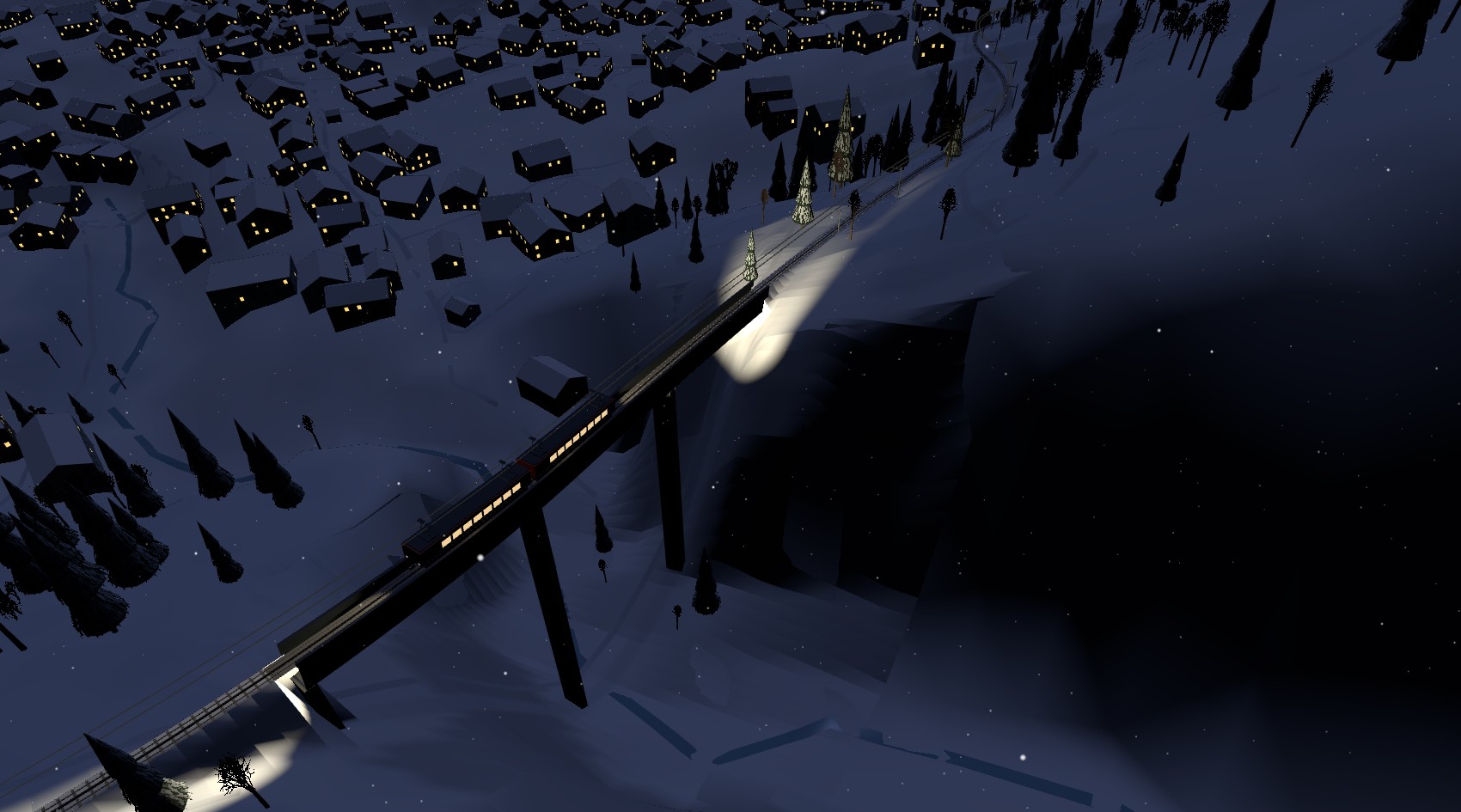
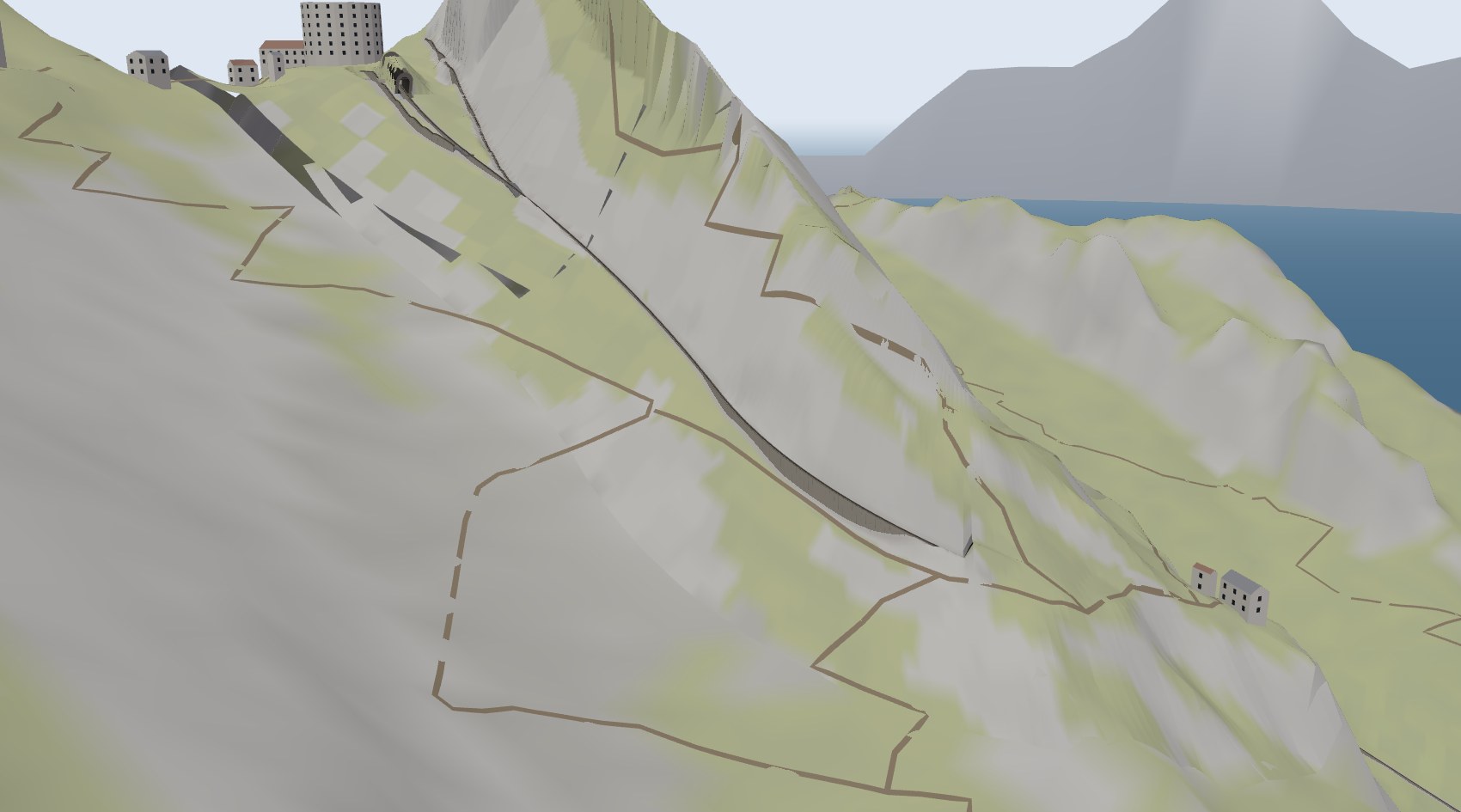
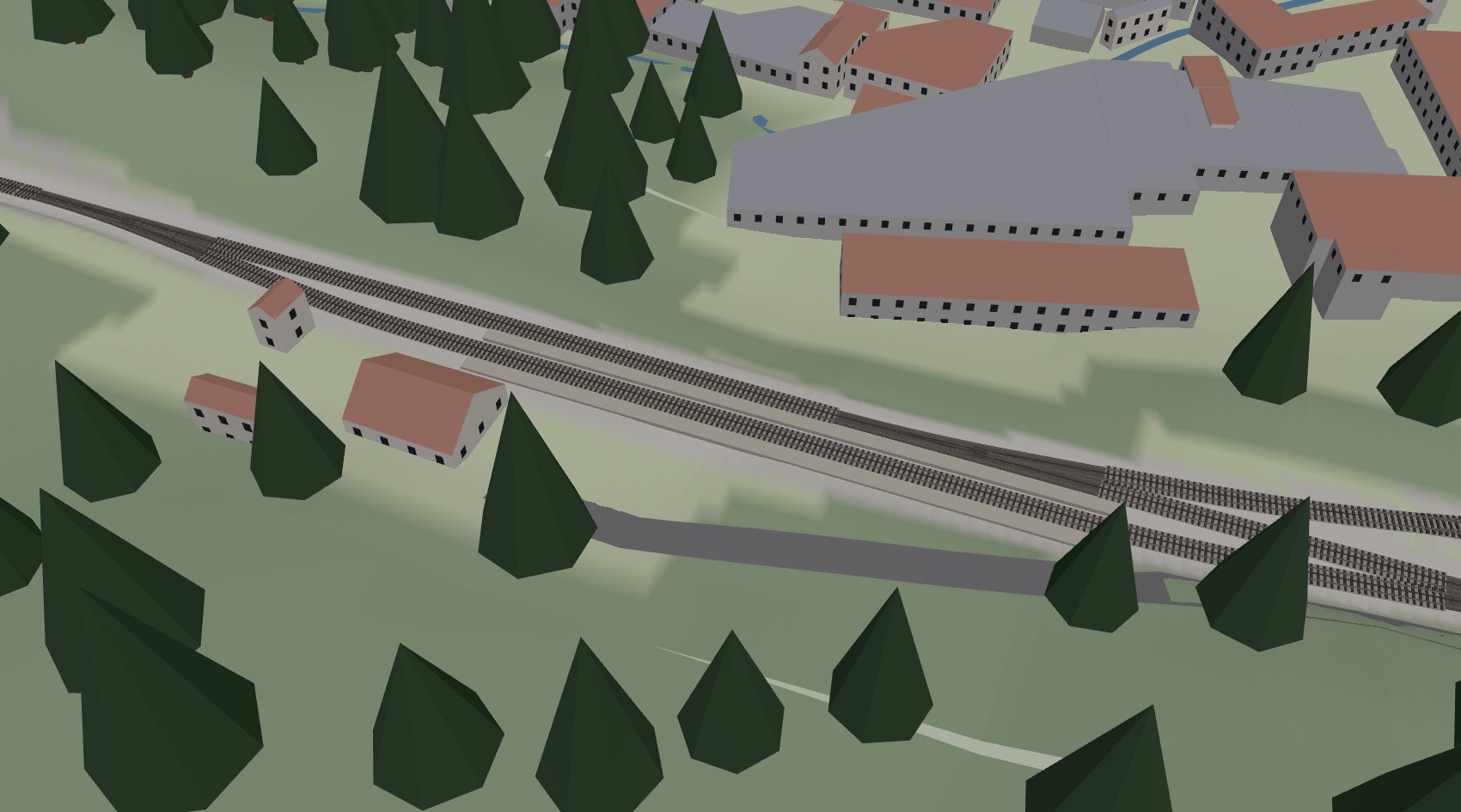
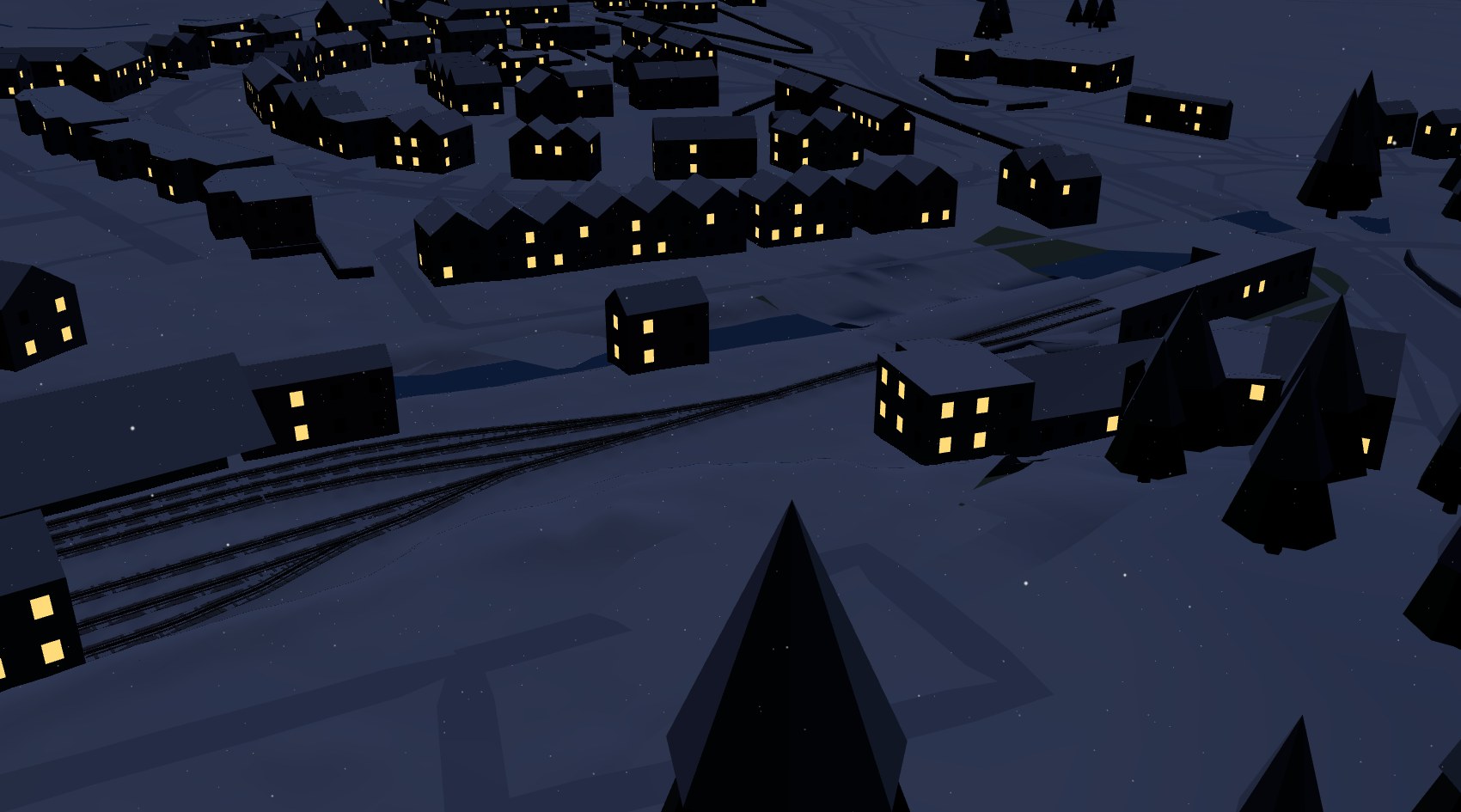
Rack Railways rebuilds real mountain rack railways so you can drive them in your browser. Each line is laid on its real route from OpenStreetMap and the national survey’s terrain, with its stations, passing loops and working points, its tunnels and bridges, and the engines and carriages that ran on it. Climb from the bottom station to the summit, ride in the cab, change the time of day and the season, or let a second train run the timetable against you.
There are fifteen lines so far, in Wales, Switzerland, Austria, Germany, the Czech Republic and the United States, some as they opened in the 1890s and some as they run today.
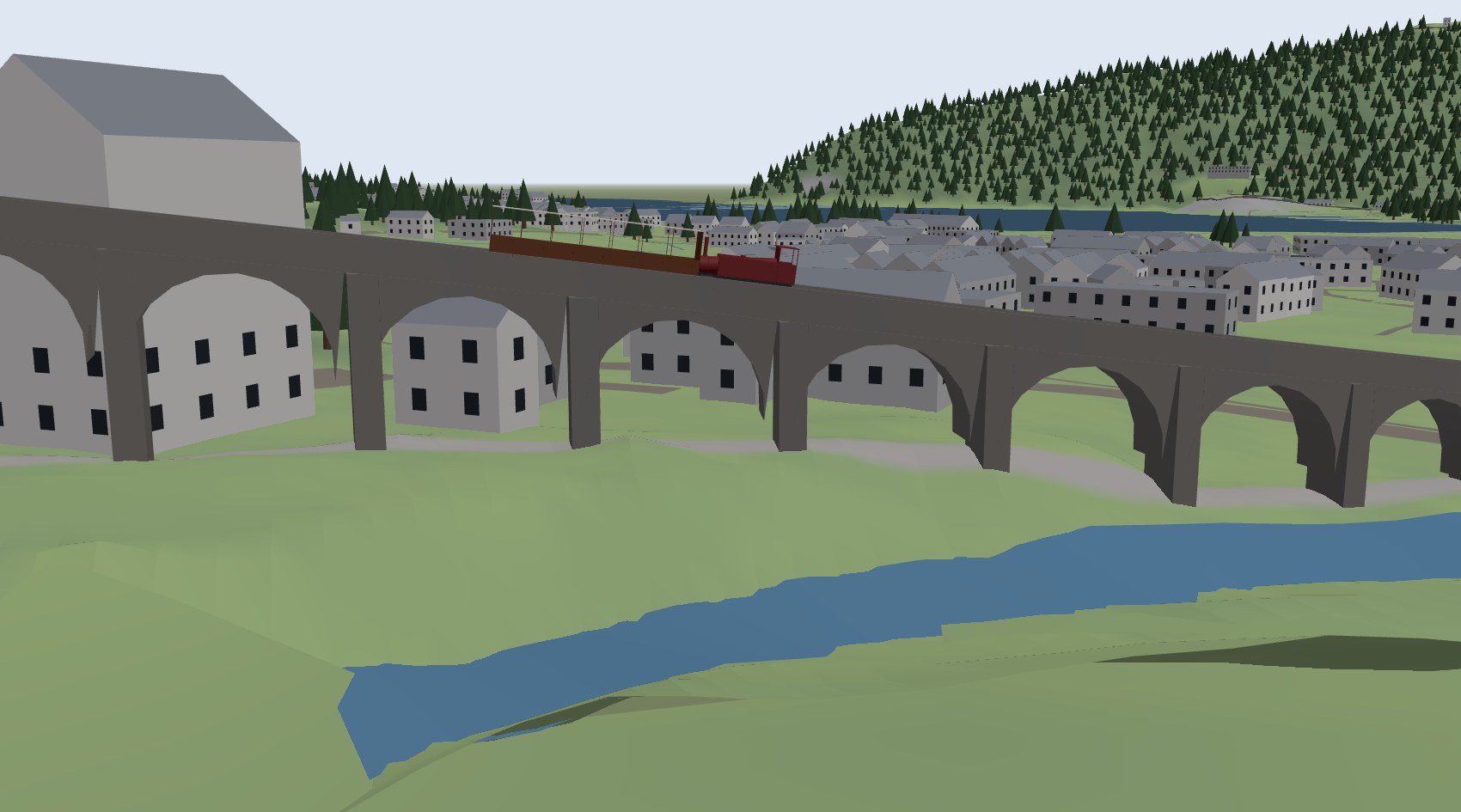
The lines
Each line opens on its own page and builds itself as it loads, so give it a few seconds.
Switzerland
- Pilatusbahn: Alpnachstad to Pilatus Kulm: the 1889 steam railcar on the Locher rack at up to 48 %, the steepest rack railway in the world.
- Wengernalpbahn: Lauterbrunnen and Grindelwald to Kleine Scheidegg, the 1893 line: 18 km at up to 25 % on the Riggenbach rack.
- Schynige Platte: Wilderswil to the summit, the 1893 line: 7.3 km at up to 25 %, four tunnels, Riggenbach rack.
- Brienz Rothorn: Brienz to Rothorn Kulm, the 1892 line: 7.6 km at up to 25 %, Abt rack and points.
- Rigi: Vitznau to Rigi-Kulm about 1893: 6.9 km at up to 25 %, double track with transfer tables.
- Monte Generoso: Capolago to Vetta, the 1890 line: 9 km at up to 22 %, Abt rack and points.
- Rochers-de-Naye: Montreux to the Rochers-de-Naye today: 10.4 km at up to 22 %, the Bhe 4/8 railcars, overhead line and avalanche galleries.
- Gornergrat: Zermatt to Gornergrat today: 9.3 km at up to 20 %, double track, three-phase overhead and the Bhe 4/8 twin railcars.
- Jungfraubahn: Kleine Scheidegg to the Jungfraujoch today: 9.3 km, seven of them inside the Eiger and the Mönch, on the Strub rack.
Wales
- Snowdon: Llanberis to the summit, the 1896 line: 7.5 km at up to 1 in 5½, Abt rack and points, loops at Hebron, Halfway and Clogwyn.
Austria
- Schafbergbahn: St. Wolfgang to the Schafberg today: 5.9 km at up to 26 %, steam on the Abt rack and the Krauss nostalgia train.
- Schneebergbahn: Puchberg to the Hochschneeberg as opened in 1897: a Krauss engine pushing two coaches through two spiral tunnels.
Germany
- Wendelsteinbahn: Waching to the Wendelstein today: the Strub rack with adhesion between, a 1912 electric locomotive pushing its trailer.
Czech Republic
- Tanvald–Kořenov: Tanvald to Kořenov: the T 426.0 on the Abt rack at up to 58 ‰, Dolní Polubný with its rack turnouts.
United States
- Pikes Peak: Manitou Springs to the summit as opened in 1891: 14 km at up to 25 %, a Baldwin tilted-boiler engine pushing one car.
Driving
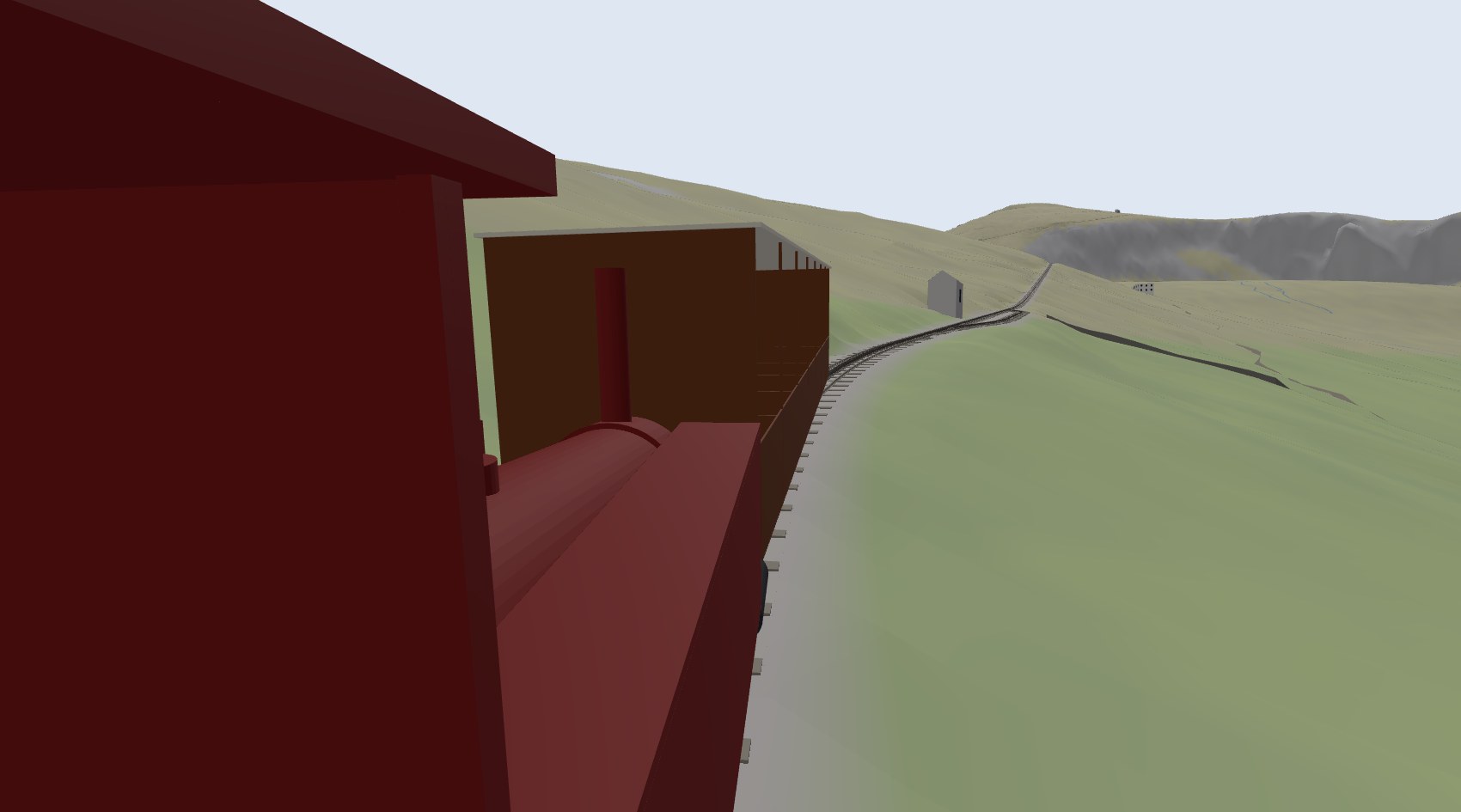
Press ▲ Up, or the up arrow key, and the train climbs; ▼ Down brings it back. Drag to look round, or choose Cab ride to ride on the footplate. Set the points with the Lower and Upper buttons as you reach each loop: like the real thing, a train will not run through points set against it. Go to takes you to any station, Fast ×10 shortens the trip, and the time and season settings bring dusk, night and snow. The lines are happiest on a computer.
How rack railways work
Nine illustrated chapters explain the rack railway itself: why wheels slip on a hill, the people who invented the racks, how the teeth mesh, how a train gets onto the rack, points on a mountain, why the boilers lean, and how the trains come safely down. Each chapter has a working model to try.
Working models
The workshop holds the printable working-model kits behind the project: the Snowdon engine, the Tanvald T 426.0 and the Pilatus railcar, with their parts, points and test tracks, and a view of the rack and pinion meshing.
Presently, the .STL downloads are disabled from the web version of the app whilst I refine and test build the models. however, in-time these will appear here as downloadable kits for the track, rolling stock and mechanisms.
Map data © OpenStreetMap contributors (ODbL). Heights from swisstopo, the Welsh Government LiDAR survey (OGL), ČÚZK, the BEV (CC BY 4.0), USGS 3DEP, the Bayerische Vermessungsverwaltung (CC BY 4.0) and Copernicus GLO-30. If you have a rack railway you would like to see next, get in touch.